


The natural properties of oak are the foundation of the core value of oak finger joints board. As a high-quality hardwood, oak boasts moderate density, clear grain, and a stable structure. It is naturally resistant to wear and deformation, making the resulting boards less susceptible to cracking and warping over long periods of use. This characteristic stems from the dense wood structure formed during oak's growth, which ensures excellent dimensional stability despite fluctuations in temperature and humidity. For wholesale customers, oak's natural advantages directly translate into quality assurance for downstream products. The product can be used in cabinets, tables and chairs, or decorative panels, meeting consumers' basic demands for durability and aesthetics in solid wood products. Furthermore, the clear natural grain provides an excellent foundation for subsequent surface treatments (such as paint and wood wax oil), reducing processing complexity and minimizing production losses.

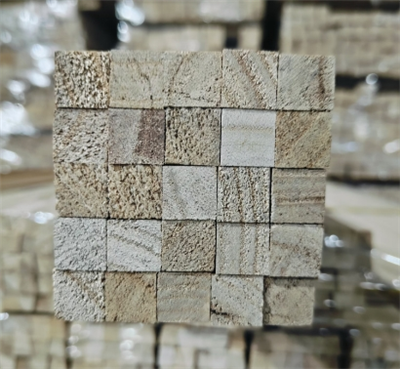
The product's finger-jointing process further enhances its practicality and cost-effectiveness. This product utilizes a solid wood finger-joining process, processing the oak raw material into short pieces with mortise and tenon joints, which are then joined together to form a complete board. This process's advantage lies in fully utilizing wood resources and reducing raw material waste. The mortise and tenon joints enhance the overall strength of the board and avoid uneven stress caused by the grain direction of a single long piece. From the perspective of wholesale customers, finger-jointed boards offer greater dimensional stability, reducing processing errors caused by board deformation during subsequent cutting, punching, and assembly, thereby improving production efficiency. Furthermore, finger-jointing allows for customized board lengths and widths, eliminating the need for complex splicing, reducing production steps, and facilitating large-scale production.
Environmental compliance is crucial for ensuring that products meet market demand. During the production process, oak finger joints board utilizes adhesives that meet national and industry environmental standards. Formaldehyde emissions from the adhesives are controlled within specified limits, ensuring that the finished boards meet hazardous substance limits for interior decorative and renovation materials. Furthermore, all oak raw materials are sourced from legal and compliant timber sources, with complete wood traceability information and compliance with forestry resource protection regulations, minimizing legal risks for customers due to raw material sourcing issues. For wholesale customers, environmentally compliant products can not only meet the end consumers' demand for healthy homes and help customers open up the market, but also avoid returns, complaints and other problems caused by products that do not meet environmental standards, ensuring the stable development of customers' business, especially in market areas that focus on environmental protection requirements, providing customers with product competitiveness support.

Company Profile and FAQ
The production process at Heze Mudan District Xinglu Wood Industry Co., Ltd. consists of five steps: drying, planing, assembly, hot pressing, and finishing. First, the wood undergoes treatment in a steam drying kiln to precisely reduce its moisture content to the target value. Next, a four-side planer removes burrs to ensure a thickness tolerance of ±0.2mm. The assembly stage cross-arranges the veneers according to a mechanical model to offset internal stresses. The hot pressing process utilizes a segmented pressure curve, with rapid pressure increase in the front section for shaping, followed by pressure maintenance to solidify the resin, ultimately maintaining a pressure above 1.5MPa. After cooling and demolding, the wood enters the precision cutting process, equipped with a CNC saw to achieve an error of no more than 0.5mm.
Q: How is the price calculated?
A: The price is usually calculated per cubic meter or per cubic foot and depends on factors such as wood species, grade, dimensions, and order quantity.
Q: Do you provide samples? Are they charged?
A: We can provide small samples to qualified B-end customers. A nominal sample fee and shipping cost are usually charged, which can be credited against future orders.
Q: What is the production lead time?
A: For standard products, it is usually 15-30 days after receiving the deposit. The lead time for custom products or large volume orders may be longer and needs to be confirmed.
Hot Tags: oak finger joints board, China oak finger joints board manufacturers, factory, Oak Finger Joint Board, oak planks, Oak Wood Board, Oak Wood Panel, White Oak Boards


